How to Speed Up a House Sale in the UK
Most of the delay in a house sale comes after the offer. What sellers and their estate agents can do before and after it to get to exchange sooner.
Key takeaways
- The government puts the average purchase at around 120 days, much of it spent waiting for searches, documents and answers after the offer.
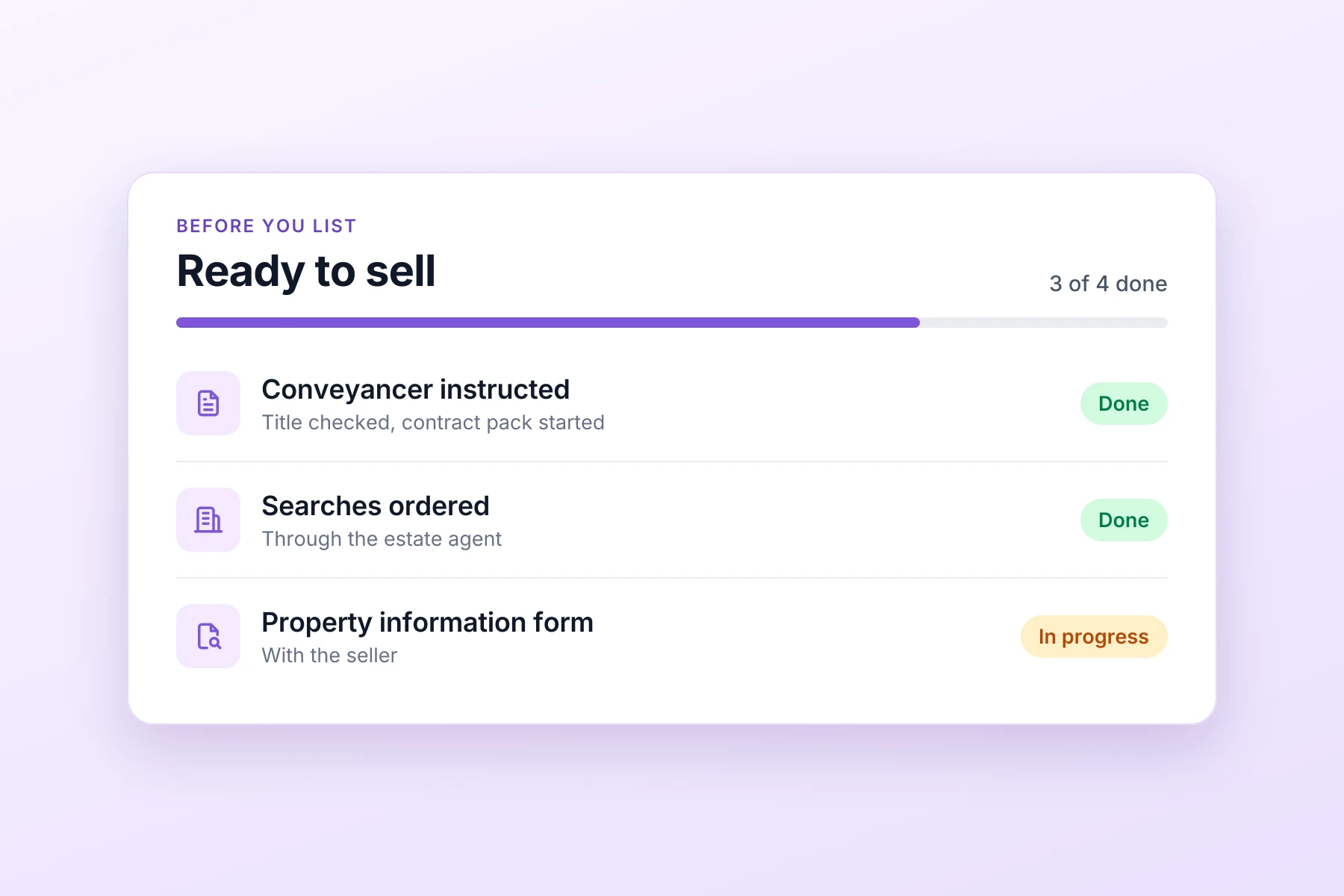
- Instruct a conveyancer when you list, not when you accept an offer, so the contract pack is ready when a buyer is.
- Order the searches before listing, through your estate agent: the buyer's solicitor then starts with them in hand.
- Gather the documents buyers' solicitors always ask for, such as building regulations and window certificates, warranties and guarantees.
- Complete the property information forms early and answer enquiries quickly: every day a question waits is a day added to the sale.
Finding a buyer is the part of a sale most people plan for. The part that takes the time comes after: the government puts the average purchase at around 120 days, and one in three sales falls through. Most of the waiting is for things that could have been started before the offer.
This guide covers what sellers and their estate agents can do to get to exchange sooner, starting with the steps before you list.
1. Instruct a conveyancer when you list
Most sellers wait until they accept an offer before choosing a conveyancer. Instruct one when you list instead, so they can check your title, complete their own ID and AML checks, and prepare the contract pack while you are finding a buyer.
2. Order the searches before you list
The buyer's solicitor usually orders searches after the offer, and then the sale waits for them, sometimes for weeks. Many estate agents can now order them when you list, and recharge you, so the buyer's solicitor starts with them in hand. The government plans to make this standard, through a sales pack prepared before listing.
For the buyer's solicitor to use them, they need to be regulated searches whose insurance covers the buyer and their lender, and recent enough for the lender. See upfront searches and sales packs and who pays for searches when selling a house?
3. Gather the documents buyers always ask for
Missing paperwork is one of the most common late delays. Find these before you list:
- Building regulations certificates for extensions, loft conversions and other building work. See missing building regulations certificate.
- Window and door certificates, such as FENSA. See lost FENSA certificate.
- A new home warranty, such as NHBC, for a home under ten years old. See lost NHBC certificate.
- Planning permissions for any changes to the property.
- Guarantees and service records, such as damp proofing, the boiler and electrical work.
4. Complete the property information forms early
Your conveyancer will send you the property information form and the fittings and contents form. Complete them while you are waiting for a buyer, and be thorough: vague answers become enquiries later.
5. For a leasehold, ask for the management pack now
The buyer's solicitor needs information from the landlord or managing agent, usually in a management pack, and it can take weeks to arrive. Ask your conveyancer to request it as soon as you list.
6. Choose a buyer who is ready to proceed
When you compare offers, look at how ready each buyer is, not just the price: whether they have a mortgage agreed in principle, whether they have a property to sell, and how long their chain is. Ask your agent to check.
7. Answer enquiries quickly
The buyer's solicitor will raise questions about the property. Every day a question waits is a day added to the sale, so answer them as soon as your conveyancer sends them, and ask your agent to keep the chain moving.
8. Consider a reservation agreement
Some agents offer reservation agreements, in which the buyer and seller each commit for a period, usually with a fee or deposit at stake. The government plans to encourage them while it prepares legislation for binding contracts. See the home buying reform roadmap.
How Casera helps estate agents
Casera provides property searches to conveyancers, and to estate agents who order them when a property is listed. Your agency orders the searches from its own account and recharges the seller. Our local authority searches are regulated searches, and their Stewart Title indemnity covers the buyer and their lender, whoever ordered them. If the sale takes longer than six months, we refresh them free of charge.
Frequently asked questions
How can I speed up my house sale?
Do the work before you accept an offer: instruct a conveyancer, order the searches through your estate agent, gather your certificates and complete the property information forms. Then answer enquiries quickly.
Can I order searches before I find a buyer?
Yes. Many estate agents can order searches when you list, and recharge you. The buyer's solicitor can use them if they are regulated searches insured for the buyer and their lender, and recent enough for the lender.
What slows down a house sale most?
Waiting: for searches, for missing documents such as building regulations certificates, for answers to enquiries, and for the rest of the chain. Most of it can be started before an offer is accepted.
Does a leasehold sale take longer?
Often, because the buyer's solicitor needs information from the landlord or managing agent, in a management pack. Ask for it as soon as you list.
How long does it take to sell a house in the UK?
The government puts the average home purchase at around 120 days. A sale prepared before the offer can be considerably quicker.