
Upfront Searches and Sales Packs: A Guide for Estate Agents
What a sales pack is, why the government wants searches done before a property is listed, and how estate agents can order them now, with the cost, timing and reliance explained.
Key takeaways
- A sales pack gathers the information a buyer needs before the property is listed. The government's June 2026 roadmap plans to require one, including searches, once legislation is passed.
- Until then it is voluntary, so agents can offer upfront searches now and get ahead of the change.
- Order the local authority, drainage and water, and environmental searches, plus searches such as coal mining where the area needs them.
- The buyer's solicitor decides whether to use them, so order regulated searches whose insurance covers the buyer and their lender.
- Most lenders want searches no more than six months old at completion, so plan for a refresh if the sale runs long.
- If you recharge the seller, tell them about the charge and the amount before they agree to it.
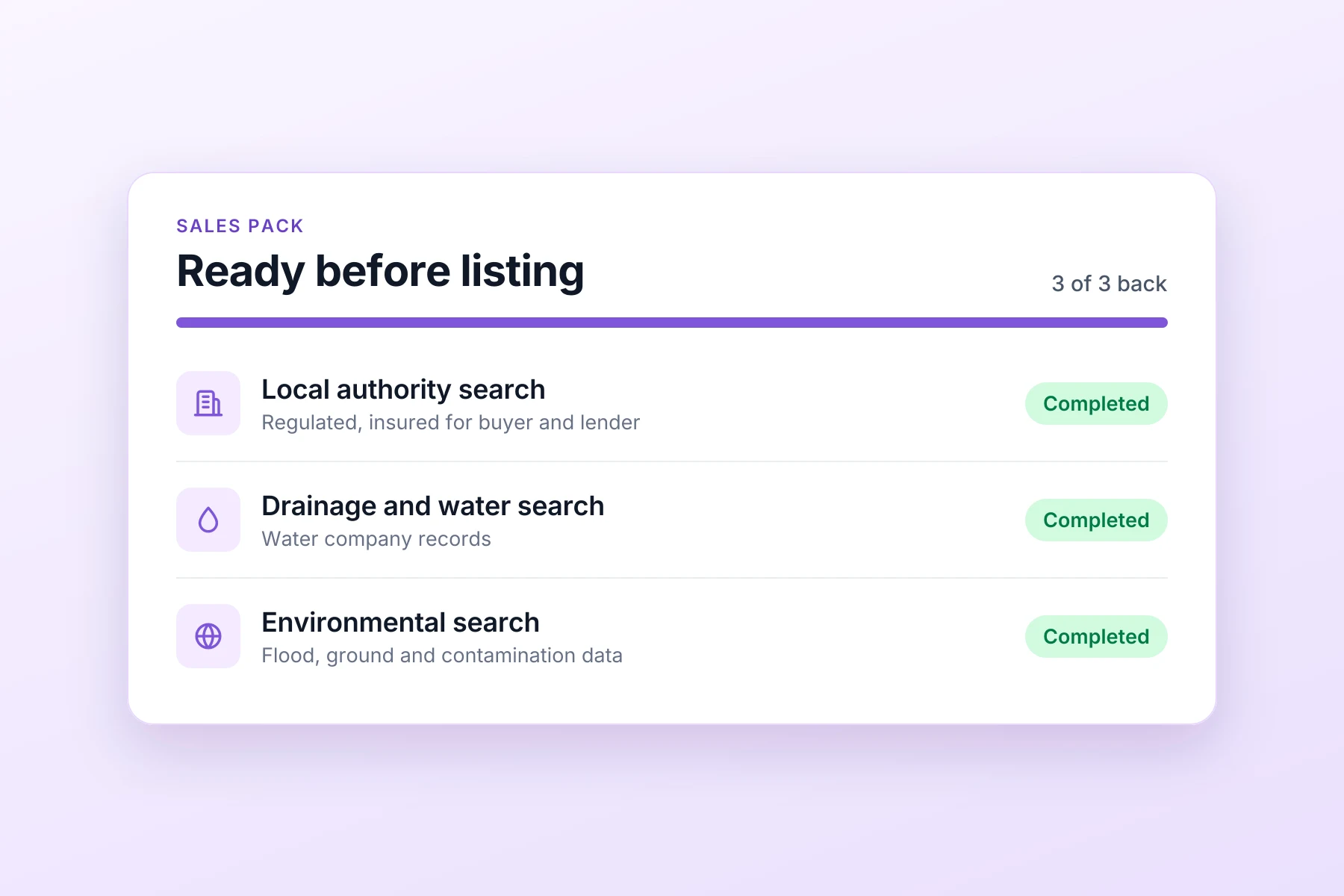
Most property searches are ordered by the buyer's solicitor after an offer is accepted, and then the sale waits for them. The government wants that to change: its June 2026 roadmap plans a sales pack, including searches, prepared before a property is listed. Agents do not have to wait for the law to offer it.
This guide explains what a sales pack is, what has been announced, which searches to order, and how to handle reliance, refreshes and the cost.
What a sales pack is
A sales pack is the information a buyer and their solicitor need, gathered before the property goes on the market rather than after an offer. The government's roadmap describes a standardised pack, including searches and a property condition report, with the seller keeping overall responsibility for it. Conveyancers gather and check the legal and title information, and surveyors report on the condition.
Searches are the part an agent can put in place on day one. Several of them also answer the questions a listing has to cover: see material information for estate agents.
What the government has announced
- The roadmap. Published in June 2026, it is the government's response to the 2025 consultations on home buying and selling and on material information in property listings.
- A sales pack before listing. Legislation will require one, including searches and a property condition report, when parliamentary time allows. No bill has been introduced yet.
- Voluntary steps first. The government will work with the industry on the sales pack information sellers can provide upfront now, and set out how and when search information needs refreshing, and what lenders need in order to accept it.
- Binding contracts later. Legally binding contracts at an earlier stage are planned, but only once sales packs are established.
As of November 2026, the voluntary list and the refresh guidance have not been published.
Which searches to order
- A local authority search, covering planning and building control history, roads, local land charges and more. A regulated search answers the same enquiries as the council's own official search, and is usually quicker: see regulated or official: which local search should you order?
- A drainage and water search, confirming whether the property is connected to mains water and sewers, and where public sewers run.
- An environmental search, covering flood risk, contamination and ground stability.
- Searches for the area, such as coal mining, where the property needs them. The seller's conveyancer can confirm which apply.
Will the buyer's solicitor and lender rely on them?
The buyer's solicitor decides which searches to rely on, and the lender sets its own requirements. What they look for:
- A regulated search from a provider that subscribes to the Search Code, which protects buyers, sellers, agents, conveyancers and lenders who rely on its reports.
- Insurance that covers the buyer and their lender, not only whoever ordered the search.
- Searches recent enough for the lender: most want them no more than six months old at completion.
Before you order, ask your search provider who their insurance covers. Casera's local authority searches are regulated searches, and their Stewart Title indemnity covers the buyer and their lender, whoever ordered them.
How long searches stay valid
Searches do not expire, but most lenders want them no more than six months old at completion. A sale that starts with searches at listing uses up some of that time before an offer arrives, so plan for a refresh if the sale runs long, and check what your provider charges for one. Casera refreshes them free of charge if the sale takes longer than six months.
Who pays, and what to tell the seller
There is no rule on who pays for upfront searches. In practice the agency pays the search provider and recharges the seller, or includes the cost in its fee. Either way:
- Tell the seller about the charge, and the amount, before they agree to it. The Estate Agents Act 1979 requires agents to tell clients, before they are bound, about charges payable to the agent or to anyone else.
- Disclose any commission or referral fee you receive from a provider, in writing, before the seller decides.
- Agree where the results go. The reports should go to the seller's conveyancer once they are instructed, and on to the buyer's.
When to order
The best time is when the seller instructs you, so the results are back before the listing goes live and before the first viewing. You will need the seller's agreement and the property's full address. For an unusual property, ask the seller's conveyancer which extra searches it needs.
How Casera works for estate agents
Open an account for your agency, order the searches from the property's address in 60 seconds, and see the council's current turnaround before you order. Pass the reports to the conveyancers when they are instructed. Your agency pays and recharges the seller, and if the sale runs past six months, we refresh the searches free of charge.
Frequently asked questions
What is a sales pack?
The information a buyer and their solicitor need, gathered before a property is listed rather than after an offer: searches, legal and title information, and a report on the property's condition. The government plans to make one a requirement before listing.
Can estate agents order property searches?
Yes. Searches can be ordered by anyone with an account with a search provider. Casera offers accounts for estate agencies.
Who pays for upfront searches?
The seller, in the end. The agency usually pays the search provider and recharges the seller, or includes the cost in its fee.
How long are property searches valid for?
They have no fixed expiry, but most lenders want searches to be no more than six months old at completion. Older searches are usually refreshed.
Will the buyer's solicitor accept searches ordered by the agent?
It is the buyer's solicitor's decision, and they need searches the buyer and lender can rely on: a regulated search with insurance that covers them. Casera's local authority searches are insured by Stewart Title for the buyer and their lender, whoever ordered them.