Regulated or Official: Which Local Search Should You Order?
What a regulated local authority search is, how it differs from the council's official search, what lenders accept, and when each one is the right choice.
Key takeaways
- An official search is compiled by the council, which issues the LLC1 certificate and replies to the CON29 enquiries.
- A regulated search is compiled by an independent search agent, who inspects the same registers and answers the same enquiries in a report.
- The UK Finance Mortgage Lenders' Handbook accepts regulated searches that are insured and produced under the Search Code, though a few lenders set their own conditions in Part 2.
- Regulated searches are usually quicker to come back and follow one consistent layout, whichever council they cover.
- Order an official search when the lender or client requires it, or when the matter turns on the council's own reply.
Every residential purchase needs a local authority search, and for most properties you have a choice of two: the council's official search or a regulated search from an independent search agent. Both answer the same questions about the property. They differ in who compiles them, how long they take, what they cost and how the answers are presented.
This guide explains the difference, what lenders accept, and when each is the right choice.
What an official local authority search is
An official search is produced by the council itself. It has two parts: the LLC1, a certificate of search of the local land charges register, and the council's replies to the CON29 enquiries, which cover planning and building control history, road adoption, enforcement notices, proposed road schemes and the rest.
Because the council's own staff compile the replies, the official search carries the council's authority. That is its strength. Its weakness is speed: turnaround depends entirely on the council's workload, and it ranges from a few days to several weeks.
What a regulated local authority search is
A regulated search is compiled by an independent search agent, who inspects the same registers and records and answers the same enquiries in a report. It covers the local land charges register and every CON29 enquiry, with the CON29O optional enquiries available on request.
"Regulated" means the provider subscribes to the Search Code, administered by the Property Codes Compliance Board, which sets standards for accuracy, insurance and complaints handling. If a complaint is not resolved, it can be referred to The Property Ombudsman. Casera is registered with both.
The search is backed by insurance. Every Casera regulated local authority search comes with Stewart Title's regulated local search indemnity, which covers errors, omissions and missing answers.
Do lenders accept regulated searches?
For most lenders, yes. Part 1 of the UK Finance Mortgage Lenders' Handbook accepts a search compiled by an independent agent where the provider subscribes to the Search Code and the search is covered by insurance. A small number of lenders set their own conditions in Part 2, so check your lender's entry before you order. Casera's Lender Handbook service monitors Part 2 for changes so you do not have to.
The practical differences
- Speed. A regulated search is usually significantly faster than the official search, because the search agent is not waiting in the council's queue. The difference varies by council. Casera shows the live turnaround for both before you order, so you can choose with the dates in front of you.
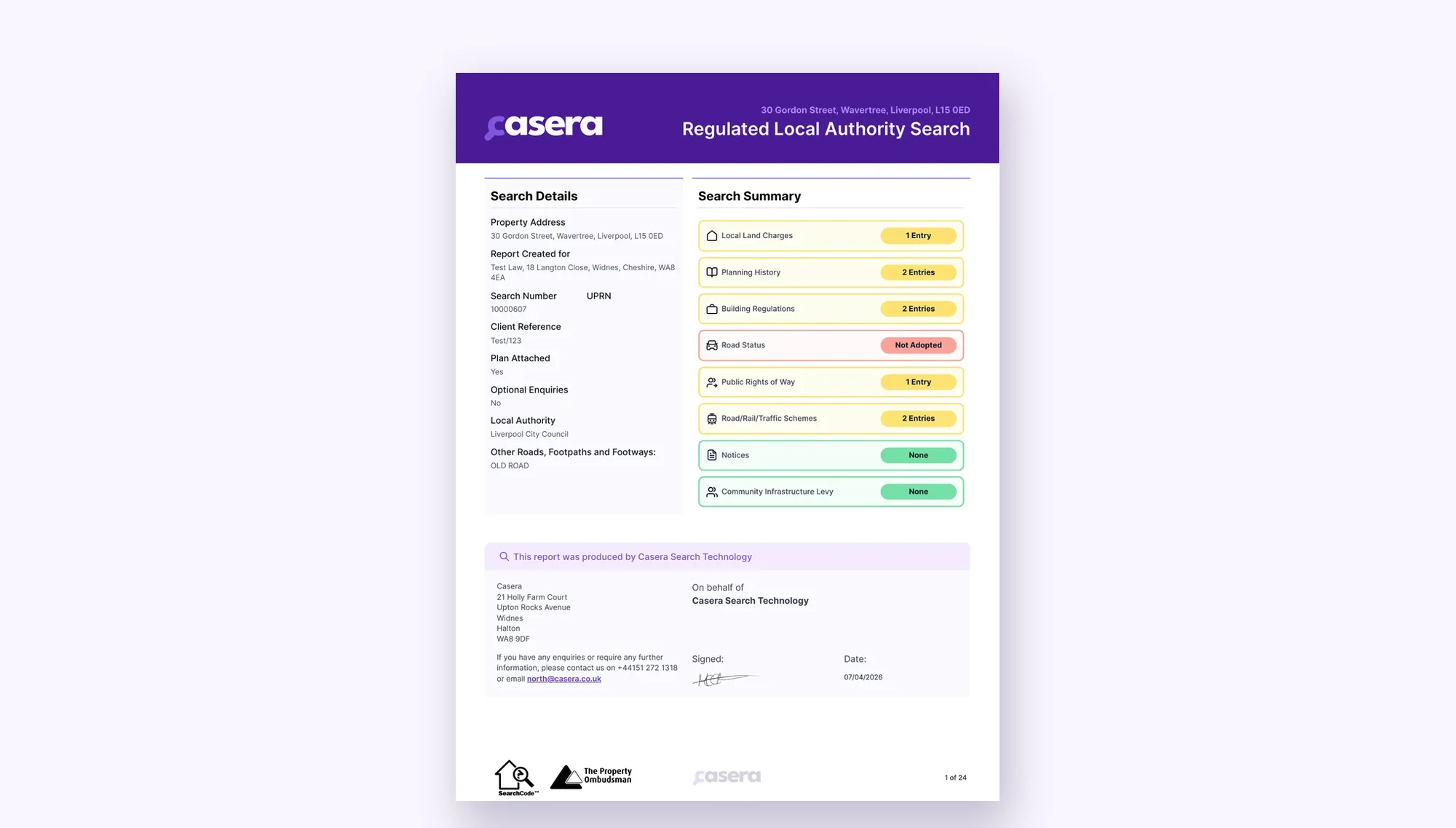
- Consistency. An official search looks different from every council. A regulated search follows one layout wherever the property is, with each enquiry flagged so the entries that matter stand out. You can see a sample.
- Cost. A regulated search is often the less expensive of the two, though council fees vary.
- Authority. The official search is the council's own reply, which some lenders and clients prefer. A regulated search carries the Search Code's standards and an insurance policy instead.
When to order an official search
Order the official search when your lender's Part 2 entry requires it, when the client instructs it, or when the matter turns on the council's own reply, for example where a planning or enforcement point is in dispute.
Otherwise, a regulated search progresses the file faster, is accepted by most lenders, and comes with insurance and a consistent, readable report.
Ordering either through Casera
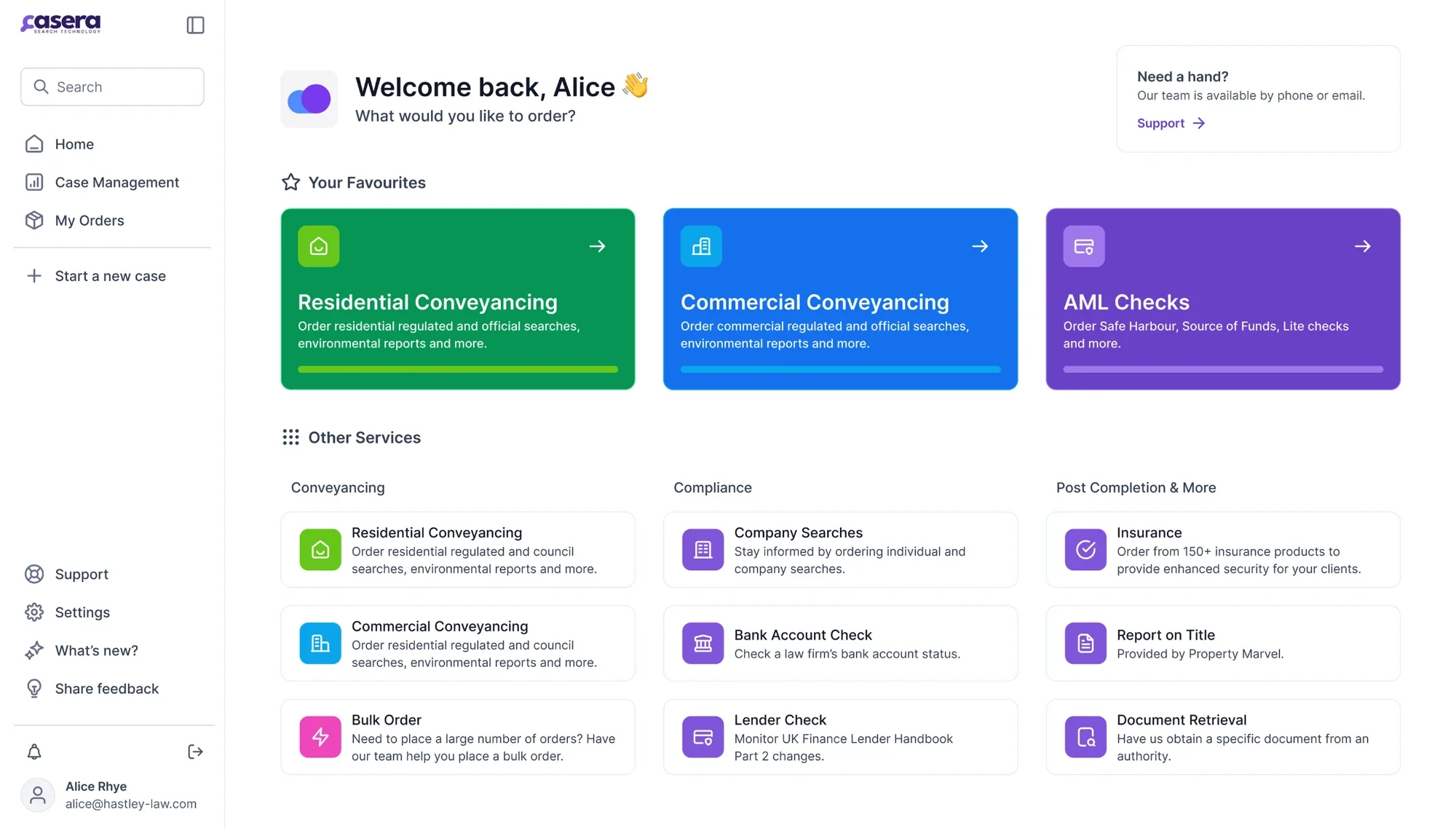
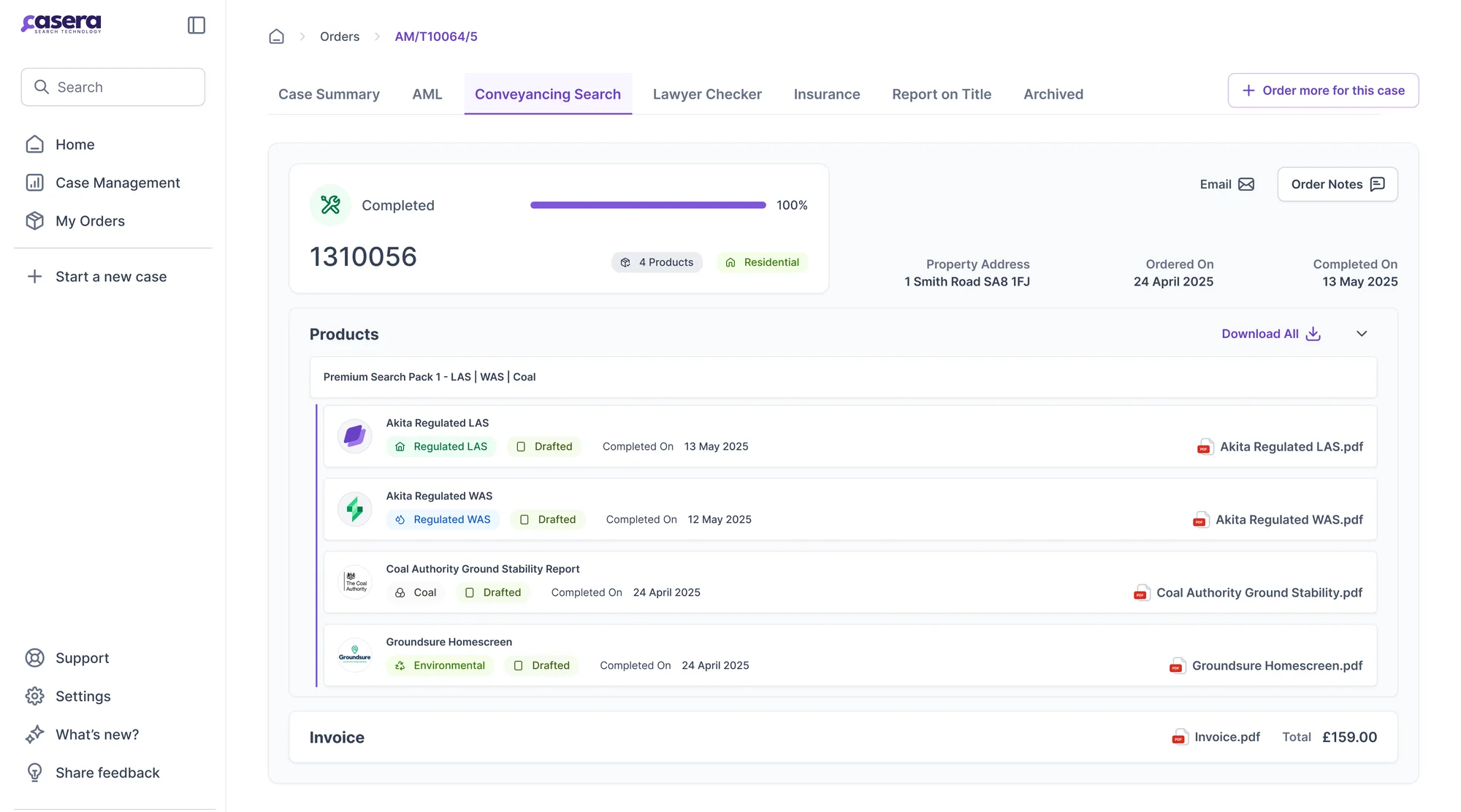
Casera offers regulated and official local authority searches for every council in England and Wales, with every CON29O optional enquiry available. Whichever you choose, you get the same ordering, the same live tracking with an estimated return date, and the same search team, who answer the phone in 20 seconds. Drainage and water and environmental searches can be added to the same order and come back on the same case.
Frequently asked questions
Is a regulated search the same as a personal search?
Yes. A personal search is the older name. Searches compiled by independent search agents under the Search Code are now called regulated searches.
Does a regulated search answer every CON29 enquiry?
Yes. A regulated local authority search answers the enquiries on the CON29, and the CON29O optional enquiries are available when you order.
What does the Stewart Title indemnity cover?
Every Casera regulated local authority search comes with Stewart Title's regulated local search indemnity, which covers errors, omissions and missing answers. The policy documents are at the back of every report.
Which is faster?
It depends on the council, but a regulated search is usually significantly faster than the council's official search. Casera shows the live turnaround for both before you order.
Can I order both for the same property?
Yes. Some firms order a regulated search to progress the file and an official search where the lender or client requires it. Both sit on the same case in Casera.