
Lost FENSA Certificate When Buying a House? What to Do
A missing FENSA certificate for replacement windows is a common hold-up. How to get a replacement, what to do if there never was one, and when indemnity insurance is used.
Key takeaways
- Replacement windows and doors fitted since April 2002 need building regulations approval, usually shown by a certificate from a scheme such as FENSA.
- If the certificate is lost, a replacement can usually be ordered from FENSA online using the property's address, for a fee.
- If the installer used a different scheme, such as Certass, the replacement comes from that scheme instead.
- If there never was a certificate, the usual options are indemnity insurance or a regularisation certificate from the council. Speak to your solicitor before anyone contacts the council.
- Windows fitted before April 2002 did not need a certificate.
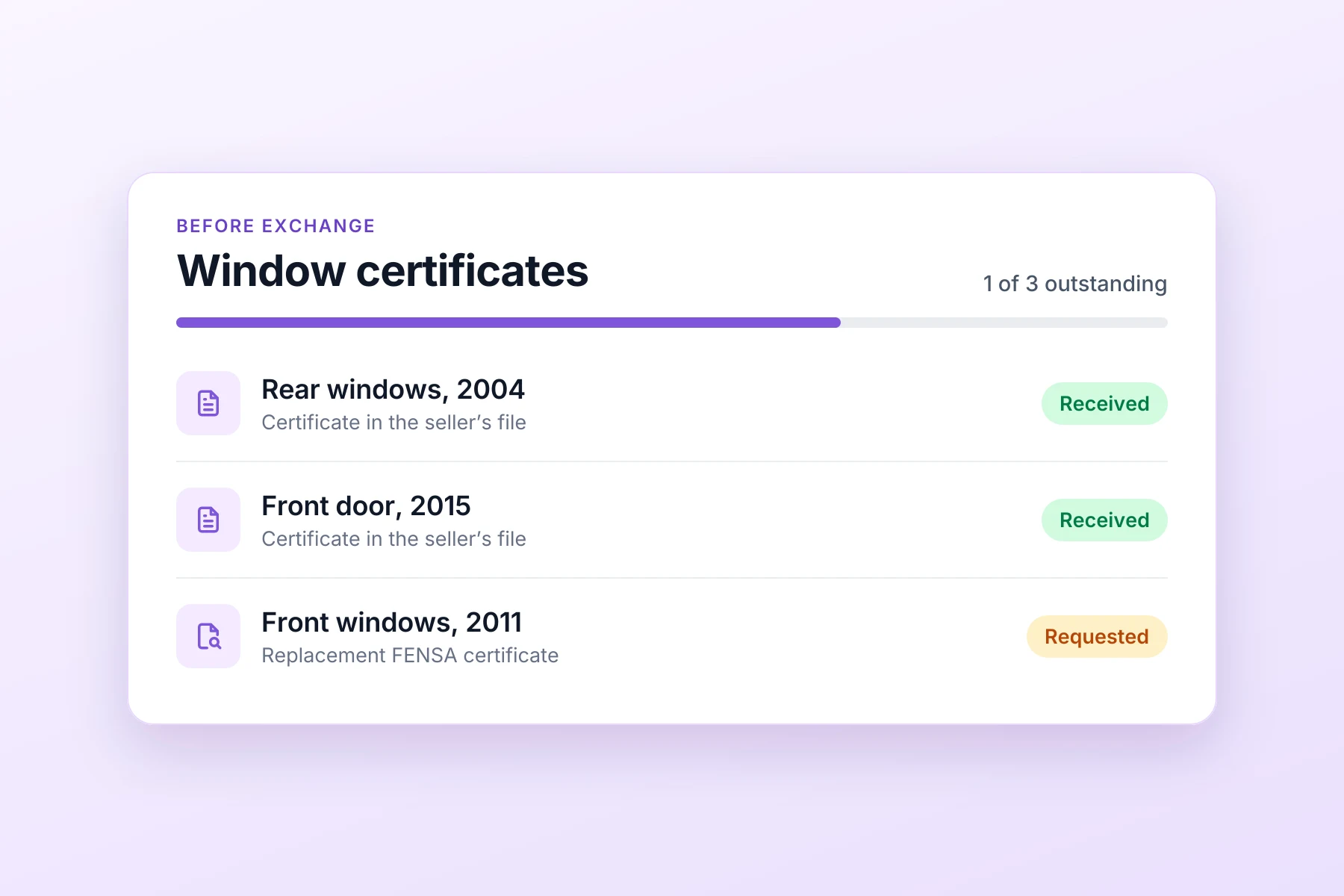
Replacement windows are one of the most common things a buyer's solicitor asks about, and a missing FENSA certificate is one of the most common reasons a purchase waits for paperwork. The good news is that it is usually easy to fix.
This guide explains what the certificate is, how to get a replacement, what to do if there never was one, and where indemnity insurance fits.
What a FENSA certificate is
Since April 2002, replacement windows, glazed doors and roof lights in England and Wales have had to meet the building regulations. Most installers prove that through a competent person scheme: they certify their own work, register it with the scheme, and the scheme issues a certificate to the homeowner and tells the council.
FENSA is the best-known scheme, but not the only one. Certass and others do the same job, so the certificate may carry a different name.
Why the buyer's solicitor asks for it
The certificate is evidence that the windows were fitted with building regulations approval. Without it, the buyer takes on the risk that the council could take enforcement action over work that did not comply. The seller usually lists the windows on the property information form, and the buyer's solicitor asks for the certificate that goes with them.
How to get a replacement FENSA certificate
- Check the sale and purchase files. The seller, or the solicitor who acted when the seller bought, may have a copy.
- Order a replacement from FENSA online, using the property's address and postcode. There is a fee, and replacements can take a little while to arrive, so check the current price and timing on FENSA's website.
- Try the other schemes if FENSA has no record: the installer may have registered with a different one.
- Check the local search. The council's records may show the scheme notification, which tells you which scheme to ask.
If there never was a certificate
Sometimes the installer did not register the work, or the windows were fitted by someone who was not in a scheme. Your solicitor will advise, but the usual options are:
- Indemnity insurance. A one-off policy covering loss if the council takes enforcement action over the windows. It is the most common answer for windows, and your lender has to accept it.
- A regularisation certificate from the council's building control team, which inspects the work and certifies it if it complies. It takes longer and may need changes to the windows.
Do not contact the council about the missing certificate yourself before your solicitor has advised. Most indemnity policies cannot be used once the council has been told about the problem. For other missing certificates, see missing building regulations certificate? What buyers can do.
If the windows were fitted before April 2002
Windows fitted before April 2002 did not need building regulations approval, so there is no certificate to find. Your solicitor may ask the seller to confirm when they were fitted.
How Casera can help
Casera works with solicitors and conveyancers on the searches and documents a purchase needs. When a certificate is holding things up, we can find who holds it, request a copy and chase it, or arrange indemnity insurance from Stewart Title where your solicitor decides a policy is the right route. See document retrieval and legal indemnity insurance.
We work through your solicitor, not around them. Tell us what is missing and who your solicitor is, and we will take it from there.
Frequently asked questions
Can I get a replacement FENSA certificate?
Usually, yes. If the installer registered the work with FENSA, a replacement can be ordered from FENSA online using the property's address and postcode. There is a fee: check the current price on FENSA's website.
Can you sell a house without a FENSA certificate?
Yes, but the buyer's solicitor will ask about it. If the certificate cannot be found or never existed, the usual answer is a replacement certificate, indemnity insurance or, less often, a regularisation certificate from the council.
What does missing FENSA certificate indemnity insurance cover?
It covers financial loss if the council takes enforcement action because the windows lacked building regulations approval. It does not mean the windows meet the regulations, and it usually cannot be used once the council has been told about the problem.
Do windows fitted before 2002 need a FENSA certificate?
No. The building regulations requirement for replacement windows in England and Wales started in April 2002, so older windows have no certificate to find.
Who orders the replacement certificate, the buyer or the seller?
Usually the seller, because the buyer's solicitor asks the seller's solicitor for it. If the seller cannot get one, the solicitors agree what happens next, often an indemnity policy.