
How Much Do Conveyancing Searches Cost?
A standard set of conveyancing searches usually costs around £250 to £450. What each search costs, why the local authority search varies most, and who pays.
Key takeaways
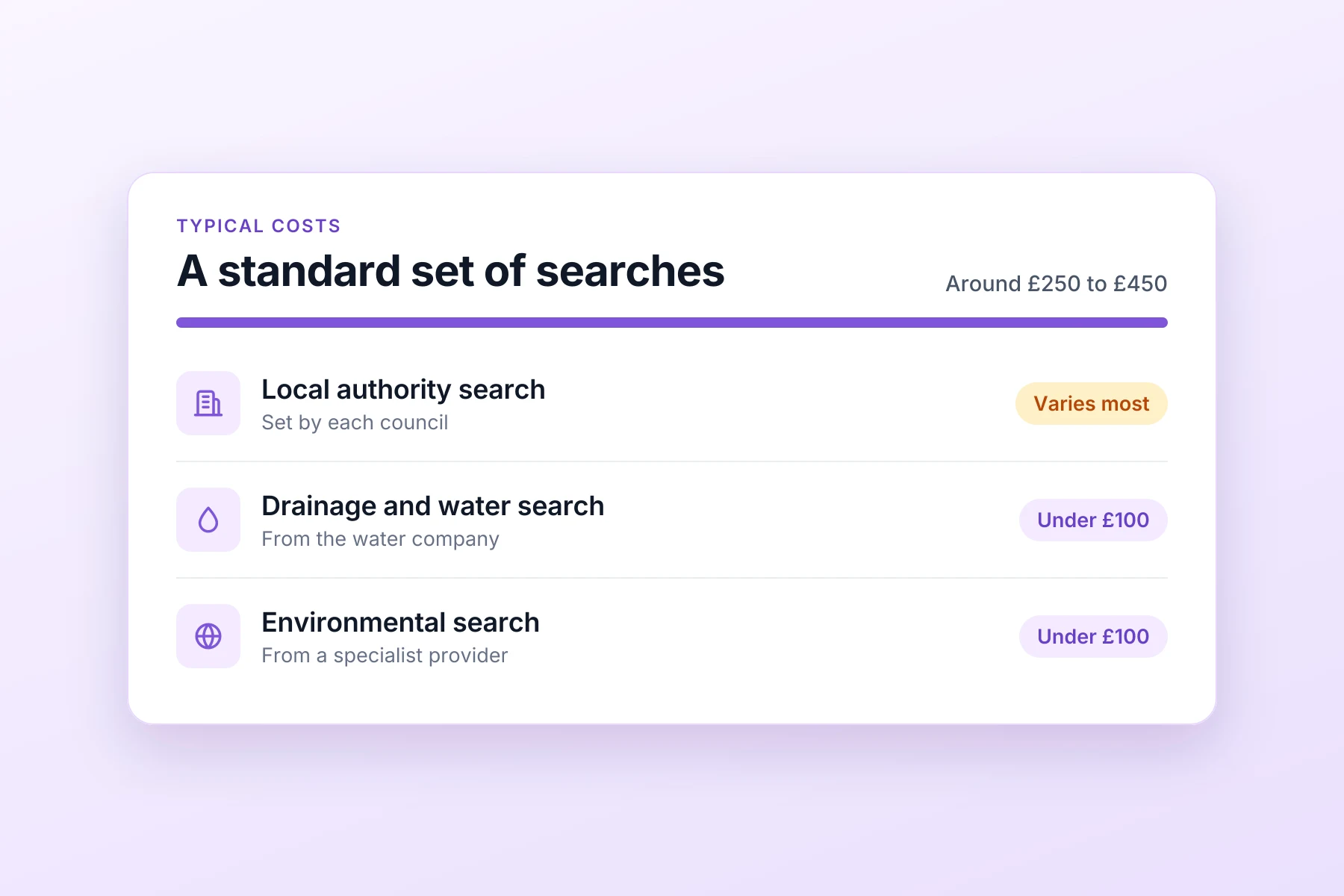
- A standard set of searches, the local authority, drainage and water, and environmental, usually costs around £250 to £450 in total.
- The local authority search varies most, from under £100 to over £300, because each council sets its own fees.
- Drainage and water and environmental searches cost less and vary less, often under £100 each.
- Extra searches, such as coal mining, add to the total where the area needs them.
- Searches are paid upfront and listed on your solicitor's quote as disbursements, separate from their legal fee.
Conveyancing searches are one of the first costs you pay when you buy a property, and the quote can look higher than expected. Most of the total comes from three searches, and one of them, the local authority search, depends on where the property is.
This guide explains what a standard set of searches costs, what each one costs, why the price varies, and who pays.
What a standard set of searches costs
A standard set of searches usually costs around £250 to £450 in total. It includes:
- A local authority search, from under £100 to over £300, depending on the council.
- A drainage and water search, typically around £45 to £100.
- An environmental search, typically under £100, depending on the provider and the report.
Your solicitor's quote should list each one. Prices include VAT where it applies, and change from time to time, so treat these as a guide.
Why the local authority search varies most
Each council sets its own fees for searching its records, and they vary several times over from one council to another. Some London boroughs are among the most expensive. A regulated search, compiled by an independent search agent from the same council records, has its own price, which can be lower than the council's official search. See what is a local authority search?
Extra searches you might need
Depending on the property and the area, your solicitor may add:
- A coal mining search, where the property is in a former coalfield.
- A chancel repair search, or indemnity insurance, in parishes where the liability could apply.
- A flood report, if the environmental search shows a significant flood risk.
- Other local searches, such as for tin, brine or limestone mining, where the area needs them.
Each adds to the total, usually by tens of pounds rather than hundreds.
Who pays for searches
Usually the buyer. Your solicitor orders the searches after your offer is accepted, and asks you to pay for them upfront. They appear on the quote as disbursements: costs your solicitor pays on your behalf and passes on at cost, separate from their legal fee.
Where the seller's estate agent orders searches before the property is listed, the seller pays for them instead, and your solicitor may be able to rely on them rather than ordering new ones. See who pays for searches when selling a house?
Is it worth paying for searches?
If you are buying with a mortgage, your lender will expect them. If you are a cash buyer, they are optional, but a few hundred pounds is small against the cost of finding out after completion about a road scheme, an enforcement notice or a flood risk. See why property searches matter.
How Casera can help
Casera provides property searches to solicitors and conveyancers, with every price quoted upfront. Firms that order the same searches on every case can have their own search pack, at discounted prices. See property searches.
If your purchase is held up by searches, tell us what is outstanding and who your solicitor is, and our search team will get in touch with them.
Frequently asked questions
How much do conveyancing searches cost?
Usually around £250 to £450 for the local authority, drainage and water, and environmental searches together. The local authority search accounts for most of the difference between one area and another.
Why do local authority searches cost different amounts?
Each council sets its own fees for searches of its records, and they vary several times over between councils. A regulated search has its own price, which can be lower than the council's.
Who pays for conveyancing searches?
Usually the buyer, through their solicitor. Where the seller's estate agent orders searches before the property is listed, the seller pays for them instead.
Are searches included in my solicitor's fee?
Usually not. They appear on the quote as disbursements: costs your solicitor pays on your behalf and passes on at cost.
Can I save money on searches?
Your solicitor will choose the searches the property needs. Skipping them to save money is rarely worth it, and if you are buying with a mortgage your lender will expect them.