
Why Are My Searches Taking So Long? What Home Buyers Can Do
Waiting for searches to come back? Why local authority searches take so long, what is normal, and what you and your solicitor can do to speed things up.
Key takeaways
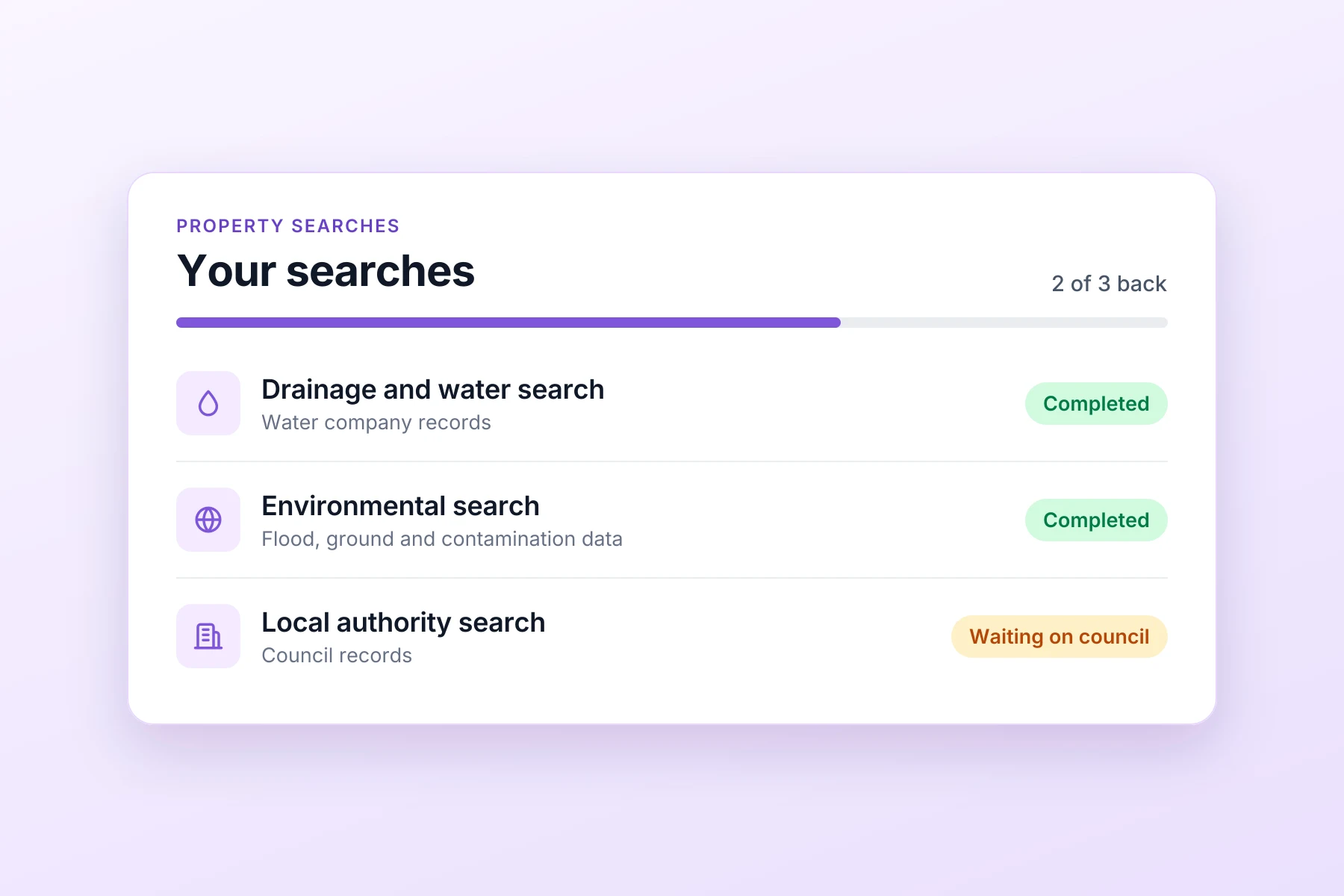
- Drainage and environmental searches usually come back within a few days. The local authority search is the one that varies, from a few days to several weeks, depending on the council.
- Most delays come from the council's workload and records, not from a problem with the property.
- Check your searches have actually been ordered: most solicitors order them once you have paid for them.
- A regulated search is usually faster than the council's official search, and most lenders accept one.
- Search delay indemnity can stand in for a late search if your lender accepts it, but it tells you nothing about the property.
Searches are one of the first things your solicitor orders, and often the last thing they are waiting for before they can report to you. While you are waiting for searches to come back, the rest of the purchase usually waits with them.
Most delays have an explanation, and some have a fix. This guide explains how long searches normally take, why local authority searches in particular can take so long, and what you and your solicitor can do about it.
How long do searches take to come back?
A standard set of searches has three parts, the local authority, drainage and water, and environmental searches, and they move at different speeds:
- Drainage and water and environmental searches are compiled from digital records by specialist providers, and usually come back within a few days.
- The local authority search depends on the council. Some return it within a few days, others take several weeks, and the time can change from month to month.
So when your searches are delayed, it is almost always the local authority search you are waiting for. Your solicitor or their search provider can tell you what is normal for your council at the moment. For what each search covers, see why property searches matter.
Why are local authority searches taking so long?
A local authority search answers questions about the property's planning history, building control, roads, enforcement and more, drawn from several council departments. The common causes of delay are:
- The council's workload. Search teams are often small and deal with requests in turn, so a backlog or a staff shortage adds weeks.
- Records that are not digitised. Older planning and building control records may be on paper or microfiche, and each one has to be found and checked by hand.
- Several departments answering. Planning, building control and highways may each have to reply before the search is complete.
- A problem with the order. A wrong address, a new build that does not have a postal address yet, or a missing plan can send the search back to the start.
- The search has not been ordered yet. Most solicitors order searches once you have paid for them, and some wait until other checks are done.
None of these say anything about the property itself. A slow search is not a sign that something is wrong.
How to speed up your searches
You cannot make a council work faster, but you can make sure nothing on your side is slowing things down, and ask your solicitor about the alternatives.
- Pay for your searches promptly, and ask your solicitor for the date they were ordered and the date they are expected back.
- Ask whether a regulated search would be quicker. A regulated search is compiled by an independent search agent from the same council records, and answers the same questions. It is usually faster than the council's own official search, though it still depends on how quickly the council provides its information, and most lenders accept one. See regulated or official: which local search should you order?
- Ask about search delay indemnity if the search is still weeks away and the rest of the purchase is ready.
- Keep everything else moving. Your mortgage offer, your survey and the solicitors' enquiries can all progress while the search is outstanding, so it does not hold up the whole purchase.
Search delay indemnity: what it does and does not do
Search delay indemnity, sometimes called no search indemnity, is a one-off insurance policy taken out instead of waiting for a search. If something the search would have revealed, such as a planned road scheme or an enforcement notice, later reduces the property's value, the policy covers that loss.
It is useful when a search is weeks away and everything else is ready, but it has limits:
- It tells you nothing about the property. You go ahead without knowing what the search would have shown.
- Your lender has to accept it. Each lender says whether it does in its part of the UK Finance Mortgage Lenders' Handbook, and your solicitor will check.
- It is not available if you already know about a problem that the search would cover.
Your solicitor will tell you whether it suits your purchase.
What not to do
- Do not chase the council yourself. The council deals with the search provider that placed the order, not with buyers, so a call from you will not usually move the search up the queue.
- Do not order a second set of searches without asking your solicitor. Your solicitor has to be able to rely on the searches, and your lender has to accept them. Ask whether a faster search is available instead.
Other things that hold up a purchase
If your searches are back and the purchase is still stuck, the delay is usually somewhere else:
- Enquiries. Your solicitor raises questions about the property and waits for the seller's solicitor to answer them.
- Missing documents, such as a building regulations certificate or proof that planning conditions were discharged. See missing building regulations certificate? What buyers can do.
- Your mortgage offer, and the lender's own checks.
- The chain, when a sale or purchase further along is not ready.
How Casera can help
Casera provides property searches, and the services around them, to solicitors and conveyancers. If your purchase is waiting on searches, we can help your solicitor with:
- Regulated local authority searches. We aim to return a search within a day of the council's information arriving, and can tell your solicitor the council's current turnaround before they order. See property searches.
- Indemnity policies from Stewart Title, on the same case as the searches, where your solicitor decides a policy is the right route. See legal indemnity insurance.
- Document retrieval, when a search points to a document no one can find. See document retrieval.
We work through your solicitor, not around them. If your purchase is held up, tell us what is outstanding and who your solicitor is, and our search team will get in touch with them.
Frequently asked questions
How long do searches take when buying a house?
Drainage and environmental searches usually come back within a few days. The local authority search depends on the council: some return it within a few days, others take several weeks.
Can I do my own searches when buying a house?
You can order searches yourself, but your solicitor has to be able to rely on them and, if you are buying with a mortgage, your lender has to accept them. It is usually quicker to ask your solicitor whether a faster search is available than to order your own.
Does a delayed search mean something is wrong with the property?
Almost never. Delays are usually down to the council's workload or how its records are kept. What the search finds is a separate question, answered when it comes back.
What is search delay indemnity insurance?
A one-off policy taken out instead of waiting for a search. It covers your financial loss if something the search would have revealed later reduces the property's value. It tells you nothing about the property, it is not available if you already know of a problem, and your lender has to accept it.
Who chases the council for my search?
The search provider that placed the order deals with the council, so contacting the council yourself will not usually move it along. Ask your solicitor for the date the search was ordered and the date it is expected back.