What Is a Report on Title? With a Structure You Can Follow
A report on title tells the buyer what their solicitor has found before they commit. What it covers, a structure section by section, and how to keep every report consistent.
Key takeaways
- A report on title is the buyer's solicitor's written report to their client before exchange: what they have found about the property, what it means and what the client needs to decide.
- It is different from the certificate of title, which reports to the lender.
- A clear structure covers the property and title, the searches, the enquiries, any lease, the contract, the mortgage, costs and next steps.
- Plain English and a short summary of the key points at the front matter more than length: the client needs to know what affects them.
- Firms that build reports by copying old ones end up with inconsistent reports and content from one matter in another.
The report on title is where everything the buyer's solicitor has found comes together for the client. Done well, it tells the client in plain English what they are buying, what the searches and enquiries showed, and what they need to decide before they commit. Done badly, it is a long document the client does not read, with the one point that matters buried on page eleven.
This guide explains what a report on title is, sets out a structure you can follow, and covers how to keep every report your firm sends consistent.
What a report on title is
A report on title is the buyer's solicitor's written report to their client, sent before exchange of contracts. It explains what the title, the searches and the replies to enquiries show about the property, what that means for the client, and what they need to do or decide.
It is not the certificate of title, which reports to the mortgage lender that the property is acceptable security. The two cover similar ground for different readers.
When to send it
Once you have reviewed the title, the searches and the replies to enquiries, and before exchange, so the client has time to read it, ask questions and decide. Some firms send an interim report as soon as the searches are back, and a final one before exchange.
A structure you can follow
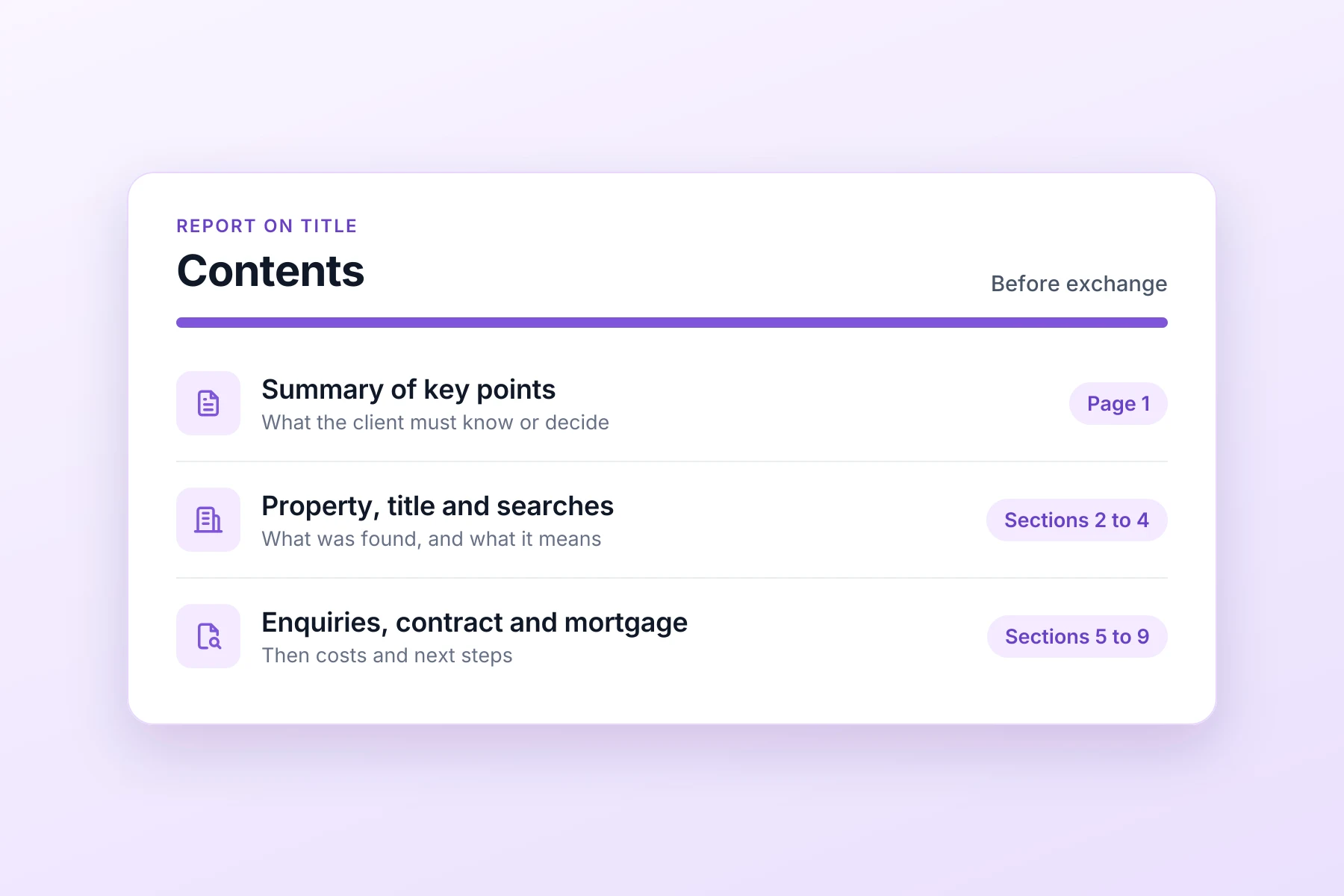
- Summary of key points. The handful of things the client must know or decide, on the first page, in plain English.
- The property. The address, what is included in the sale, and the plan, so the client can check the boundaries.
- The title. Who owns it, the tenure, rights the property benefits from, and rights and restrictions over it, such as covenants and easements.
- The searches. What the local authority, drainage and water, environmental and any other searches showed, and what each finding means.
- The enquiries. What the seller said in the property information forms and in reply to your enquiries, and anything still outstanding.
- Lease details, for a leasehold: the term left, ground rent, service charge, and the main obligations.
- The contract. The price, the deposit, the completion date arrangements, and any special conditions.
- The mortgage. The lender's offer, its conditions, and what the client must do to meet them.
- Costs and next steps. Stamp duty and other costs, what happens between exchange and completion, and what the client needs to do now.
Put the detail in the body, and keep the summary short.
Writing it so the client reads it
- Lead with what affects them. A covenant against business use matters to a client who works from home; most covenants do not.
- Explain, do not quote. Summarise what a clause means, and attach the original if they want it.
- Say what you recommend. If something needs a decision, say what you would do and why.
- Keep it consistent. The same structure on every matter makes reports quicker to write and to check.
Keeping every report consistent
Many firms build a report on title by copying the last one. Over time that produces hundreds of slightly different versions, with points missed and content from one matter turning up in another. A questionnaire-driven template, built from solicitor-written content, keeps every report to the same standard, whoever writes it.
How Casera can help
The Report on Title software Casera provides, PM-ROT from Property Marvel, builds each report from a questionnaire that adapts as you answer, using a precedent library written and kept current by practising solicitors. Watch the report build beside the questions, edit any part in place, and export a finished PDF with a contents page and your firm's branding. It covers eight report types, from Report on Title to Report on Searches. See Report on Title.
Frequently asked questions
What is a report on title?
The buyer's solicitor's written report to their client before exchange of contracts. It explains what the title, searches and enquiries show about the property, what that means for the client, and what they need to do or decide.
Is a report on title the same as a certificate of title?
No. The report on title goes to the buyer client. The certificate of title reports to the mortgage lender that the title is acceptable as security.
When is the report on title sent?
Before exchange, once the title, searches and replies to enquiries have been reviewed, so the client can raise questions and decide before they are committed.
What should a report on title include?
A summary of the key points, the property and title, the searches, the replies to enquiries, any lease, the contract terms, the mortgage, costs, and what happens next.
Who is responsible for the report's content?
The firm. Templates and precedents give a consistent starting point, but the report is the firm's advice to its client.